
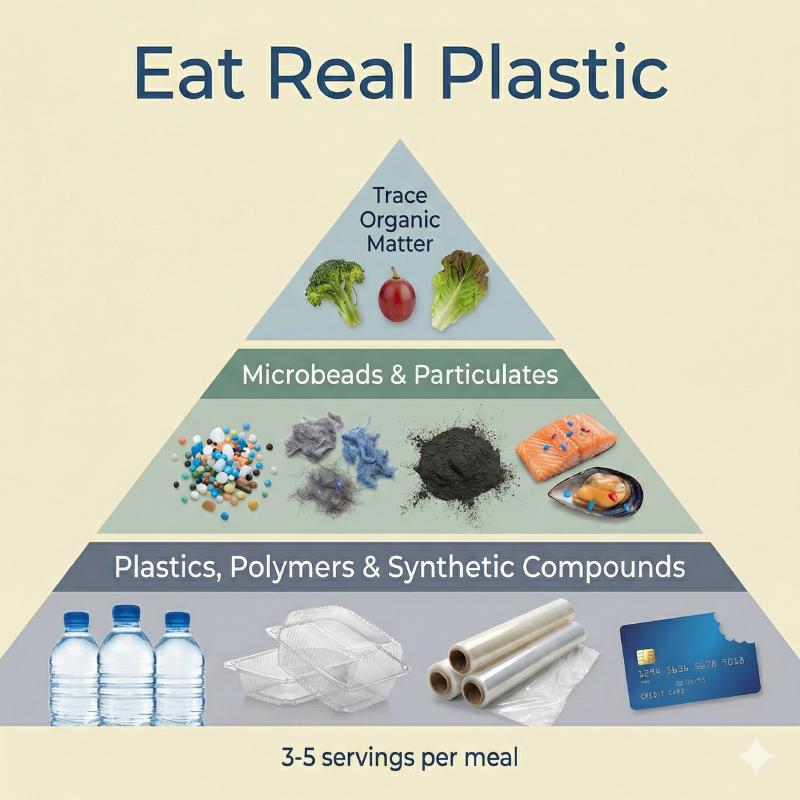
USDA Recommends 3-5 Servings Of Microplastics Per Meal, Down From Current Average Of 7
WASHINGTON, D.C. — The USDA unveiled new dietary guidelines Tuesday recommending Americans consume 3-5 servings of microplastics per meal, down from the current national average of seven. Health Secretary Robert F. Kennedy Jr. called it “a historic step toward real food and realistic expectations.”
The revised guidelines recognize microplastics as their own food group, slotted right between water and breathing. The change follows a 16-month study that found removing microplastics from the American diet was “technically unfeasible” and “probably too expensive to bother with.”
“We’re meeting Americans where they are,” Kennedy said during a press conference held inside a giant plastic water bottle. “The average person already consumes microplastics in their cereal, their salmon, their tap water, and their own blood. Instead of fighting reality, we’re embracing harm reduction.”
A single serving equals roughly the amount found in one credit card. The USDA tells adults to aim for 15-25 grams daily. Kids 2-8 should limit intake to 8-12 grams “until their digestive systems fully adapt.”
Pregnant women should consult their physicians about “fetal plastic load management.”
“At this point, what are we supposed to say?” said nutrition researcher Dr. Ben Carlisle, slumped over a desk at the Harvard School of Public Health. “We tried. We really did. But microplastics are in the rain now. They’re in the placentas. They’re in the Himalayan snowpack. The USDA isn’t wrong—they’ve just stopped pretending.”
Asked about policies to reduce microplastic pollution, Kennedy pulled a sandwich from a Ziploc bag. “That’s a longer conversation,” he said. “Right now, we’re focused on educating families.”
He took a bite. A small piece of plastic wrap came with it.
The guidelines take effect April 1st.
satire health-policy microplastics government-absurdity